Meditation
Meditation: Forms of Meditation
11/02/23 18:28
Meditation takes many forms in today's society. All have one thing in common. They use concentration techniques to still the mind and stop thought. Various practices exist such as chanting (Mantra), focusing on energy centres in the body (Chakra Meditation), breathing, mindfulness (Mahamudra), loving kindness, formal sitting (Vipassana), expressive practices (Siddha Yoga), and walking to name some of the styles. Trying each style we see what works for us. We may want to alternate between the techniques from time to time. For the purposes of this article, I will discuss Mahamudra and walking meditation.
Practical Steps To Begin Meditating
1. Find a place where there are few external distractions. A place where we feel emotionally comfortable, safe, removed from pressure and stress, is the optimal location.
2. Wear clothing that is loose and sit or lie in a comfortable position.
3. Plan to meditate in an area that is warm and comfortable. We might want to have a blanket, shawl, or light covering as some people experience a feeling of coldness when they aren't moving around for a period of time.
4. Candles may be employed to focus attention on the task at hand. If we use them, remember to be cautious and extinguish them before leaving the room.
5. Relaxation is a key component of meditation. Take a few moments to bring about a state of relaxation by taking a deep breath through your nose, expanding your lungs and diaphragm. Hold the breath for a few seconds and very slowly exhale through our mouth. Do this several times until we feel relaxed.
6. Calm, soothing music may help induce a state of tranquillity and relaxation
7. If we are hungry, have a little something to eat, as it is not necessary to meditate on a completely empty stomach.
8. Put our expectations aside and don't worry about doing it right.
Meditation
Mahamudra is the form of meditation that is a way of going about one's daily activities in a state of mindfulness. It is meditation integrated into all aspects of our lives. This following exercise is one we may do anywhere to create a feeling of inner peace. It is particularly helpful for those times when we are stuck in traffic, waiting in line at the grocery store or bank, at the office when days are hectic, or when we are picking up the kids from school or extra-curricular activities.
“What I do today is important because I am exchanging a day of my life for it,” wrote Hugh Mulligan.
Meditation helps us remember to stop and smell the roses.
Begin by taking a deep breath. Breathe deeply and as we do expand our lungs and our diaphragm. Hold the breath for a few seconds and slowly exhale through the mouth. Focus on our breath and clear our mind. Do this several times until we start to feel the slowing of our breath, and a deep sense of peace fills our body. Consciously feel the peace permeate our body. Drop our shoulders and connect through the top of our head to Universal Energy.
When the attention strays bring it back to the rising and falling of the breath or the rising and falling of the muscle in the diaphragm that controls the breath.
If we wish, we may send peace to those around us by connecting to their hearts with light and love.
Walking Meditation
A walking meditation is simply an exercise in awareness. There are four components:
1. Become aware of our breathing
2. Notice our surroundings
3. Be attentive to our body's movement
4. Take some time to reflect on our experience when we return home.
To practice walking meditation, simply bring awareness to walking. Take notice of our breathing. Are we taking short, shallow breaths without even knowing it? If so, take several deep breaths and centre on the body in the present moment. Appreciate the wonderful body we have and the blessing of being able to walk.
Notice our surroundings. What season is it? Take a few minutes to listen to the noises around us. Feel the wind, sun, fog, rain or snow on our face. Look at the people, animals, birds, sky, trees, and buildings around us. Breathe in and out and realize that we are an integral part of the environment.
Pay attention to our body. Are we holding tension in our shoulders, neck, solar plexus, lower back, or legs? Breath into any areas where we are feeling tension and let it drain into the Earth. Next, pay attention to our posture. Are we standing straight and tall or slouching? Walk in a way that is comfortable, with our body loose and uplifted. Walk with dignity and confidence, one foot in front of the other and pay attention to the experience of movement.
We may walk mindfully anywhere, along a sidewalk, walking our dog, in the mall, along the hallways at work. We simply remind ourselves to be in this moment, taking each step as it comes. Some people find it helpful to repeat a mantra (mantras are sacred words repeated in order to bring focus to our mind). We may also use a variation on the walking mantra by counting our breaths. Walk more slowly than we usually do and count how many steps it takes for the intake of breath and how many steps for the exhale. In this type of meditation, our attention is focused on both our steps and our breathing bringing together a wonderful balance of peacefulness and awareness.
Take some time to reflect on our experience when we return home. Five or ten minutes brings closure to our walk and provides an opportunity to make the transition from this place of peace to ordinary day-to-day activities.
Practical Steps To Begin Meditating
1. Find a place where there are few external distractions. A place where we feel emotionally comfortable, safe, removed from pressure and stress, is the optimal location.
2. Wear clothing that is loose and sit or lie in a comfortable position.
3. Plan to meditate in an area that is warm and comfortable. We might want to have a blanket, shawl, or light covering as some people experience a feeling of coldness when they aren't moving around for a period of time.
4. Candles may be employed to focus attention on the task at hand. If we use them, remember to be cautious and extinguish them before leaving the room.
5. Relaxation is a key component of meditation. Take a few moments to bring about a state of relaxation by taking a deep breath through your nose, expanding your lungs and diaphragm. Hold the breath for a few seconds and very slowly exhale through our mouth. Do this several times until we feel relaxed.
6. Calm, soothing music may help induce a state of tranquillity and relaxation
7. If we are hungry, have a little something to eat, as it is not necessary to meditate on a completely empty stomach.
8. Put our expectations aside and don't worry about doing it right.
Meditation
Mahamudra is the form of meditation that is a way of going about one's daily activities in a state of mindfulness. It is meditation integrated into all aspects of our lives. This following exercise is one we may do anywhere to create a feeling of inner peace. It is particularly helpful for those times when we are stuck in traffic, waiting in line at the grocery store or bank, at the office when days are hectic, or when we are picking up the kids from school or extra-curricular activities.
“What I do today is important because I am exchanging a day of my life for it,” wrote Hugh Mulligan.
Meditation helps us remember to stop and smell the roses.
Begin by taking a deep breath. Breathe deeply and as we do expand our lungs and our diaphragm. Hold the breath for a few seconds and slowly exhale through the mouth. Focus on our breath and clear our mind. Do this several times until we start to feel the slowing of our breath, and a deep sense of peace fills our body. Consciously feel the peace permeate our body. Drop our shoulders and connect through the top of our head to Universal Energy.
When the attention strays bring it back to the rising and falling of the breath or the rising and falling of the muscle in the diaphragm that controls the breath.
If we wish, we may send peace to those around us by connecting to their hearts with light and love.
Walking Meditation
A walking meditation is simply an exercise in awareness. There are four components:
1. Become aware of our breathing
2. Notice our surroundings
3. Be attentive to our body's movement
4. Take some time to reflect on our experience when we return home.
To practice walking meditation, simply bring awareness to walking. Take notice of our breathing. Are we taking short, shallow breaths without even knowing it? If so, take several deep breaths and centre on the body in the present moment. Appreciate the wonderful body we have and the blessing of being able to walk.
Notice our surroundings. What season is it? Take a few minutes to listen to the noises around us. Feel the wind, sun, fog, rain or snow on our face. Look at the people, animals, birds, sky, trees, and buildings around us. Breathe in and out and realize that we are an integral part of the environment.
Pay attention to our body. Are we holding tension in our shoulders, neck, solar plexus, lower back, or legs? Breath into any areas where we are feeling tension and let it drain into the Earth. Next, pay attention to our posture. Are we standing straight and tall or slouching? Walk in a way that is comfortable, with our body loose and uplifted. Walk with dignity and confidence, one foot in front of the other and pay attention to the experience of movement.
We may walk mindfully anywhere, along a sidewalk, walking our dog, in the mall, along the hallways at work. We simply remind ourselves to be in this moment, taking each step as it comes. Some people find it helpful to repeat a mantra (mantras are sacred words repeated in order to bring focus to our mind). We may also use a variation on the walking mantra by counting our breaths. Walk more slowly than we usually do and count how many steps it takes for the intake of breath and how many steps for the exhale. In this type of meditation, our attention is focused on both our steps and our breathing bringing together a wonderful balance of peacefulness and awareness.
Take some time to reflect on our experience when we return home. Five or ten minutes brings closure to our walk and provides an opportunity to make the transition from this place of peace to ordinary day-to-day activities.
Meditation: Makina a Meditation Room
11/02/23 18:16
Meditation rooms are not always rooms per se, oftentimes, they are just secluded nooks in someone's home where one can go to to think, relax and meditate. Having a private meditation room, however, is not something that has to be exclusive to yoga practitioners. We too can have our very own meditation room, a place just to sit back and get away from the fast-paced and stressful daily life that most of us live. Our meditation room may be our own hideaway, where we breathe freely and gather our thoughts together. Here are three simple steps to help us create our own sacred space.
1. Choose a Spot for Our Meditation Room: Quietness and isolation are the primary qualities that a meditation room must have. No matter how small our home is, it is possible to have a meditation room where we have a bit of peaceful respite. Just find a place to set it up that is a little out of the way in our home. We may situate our meditation room in our own bedroom if we want. In fact, any secluded corner will do. All we need to do, if our meditation room is not a separate room in itself, is to partition it creatively so we won’t be bothered inside our nook.
2. Furnish the Meditation Room: A meditation room does not require much in terms of furnishings. The most essential piece of furniture is a comfortable chair that is wide enough for us to curl our legs in. And even with that, a chair is not that necessary. If space is a problem, a cushion can serve in its place instead. A bluetooth speaker or some other device to play music may be necessary. It helps to meditate while listening to soft, instrumental music, or perhaps to record natural sounds like the singing of birds, the sound of waves, or falling rain.
Our meditation room’s lighting may affect how well we focus and concentrate in clearing our mind here. The lighting ought to be something soft and subtle. Stay away from the harshly glowing fluorescent bulbs when lighting our meditation room.
No need to decorate the walls. If we are already going to paint the walls, a neutral colour will work best. We do not need anything that can distract from our meditation. To set and enhance the mood, however, we may put up shelves where we can place some scented candle, a vase of flowers, or perhaps some crystals. A potted plant will help set the mood, too. These are all decorations we may consider when setting up our meditation room.
3. Maintain the Meditation Room: Our meditation room is ideally the one place in our house, if not in the whole world, where we get away to relax and to clear our mind of anything that is bothering us. The one thing that will defeat this purpose is if we leave clutter in our meditation room.No matter how busy we may be with our daily life, always find the time to keep our meditation room clean and free from clutter. Cleaning our meditation room may be seen as a form of meditation in itself. After all, the reason we have a meditation room is to keep our mind clear and unburdened.
1. Choose a Spot for Our Meditation Room: Quietness and isolation are the primary qualities that a meditation room must have. No matter how small our home is, it is possible to have a meditation room where we have a bit of peaceful respite. Just find a place to set it up that is a little out of the way in our home. We may situate our meditation room in our own bedroom if we want. In fact, any secluded corner will do. All we need to do, if our meditation room is not a separate room in itself, is to partition it creatively so we won’t be bothered inside our nook.
2. Furnish the Meditation Room: A meditation room does not require much in terms of furnishings. The most essential piece of furniture is a comfortable chair that is wide enough for us to curl our legs in. And even with that, a chair is not that necessary. If space is a problem, a cushion can serve in its place instead. A bluetooth speaker or some other device to play music may be necessary. It helps to meditate while listening to soft, instrumental music, or perhaps to record natural sounds like the singing of birds, the sound of waves, or falling rain.
Our meditation room’s lighting may affect how well we focus and concentrate in clearing our mind here. The lighting ought to be something soft and subtle. Stay away from the harshly glowing fluorescent bulbs when lighting our meditation room.
No need to decorate the walls. If we are already going to paint the walls, a neutral colour will work best. We do not need anything that can distract from our meditation. To set and enhance the mood, however, we may put up shelves where we can place some scented candle, a vase of flowers, or perhaps some crystals. A potted plant will help set the mood, too. These are all decorations we may consider when setting up our meditation room.
3. Maintain the Meditation Room: Our meditation room is ideally the one place in our house, if not in the whole world, where we get away to relax and to clear our mind of anything that is bothering us. The one thing that will defeat this purpose is if we leave clutter in our meditation room.No matter how busy we may be with our daily life, always find the time to keep our meditation room clean and free from clutter. Cleaning our meditation room may be seen as a form of meditation in itself. After all, the reason we have a meditation room is to keep our mind clear and unburdened.
Meditation: Meditation Tips For People On The Move
11/02/23 17:59
Meditation is an ancient ritual that is perfect for individuals seeking a bit of peace, quiet, and inner reflection in their daily lives. However, many individuals erroneously believe they do not have the appropriate time to devote to meditation. This practice does not require a special room and hours upon hours of inner reflection to be done properly and receive the most results. In fact, meditation can be done in any quiet corner, including your living room, office, hotel room, or even on an airplane. In order to achieve the proper meditation in some of these places, we may need to practice certain techniques or bring along special devices that will block noise and ensure quiet for our designated meditation time.
Consider joining a meditation group so that we can effectively learn the methods of meditation before attempting to meditate in unusual surroundings. The techniques and methods we learn through an experienced meditation instructor will help us accomplish our own personal goals of meditation and inner exploration.
Meditation does not have to be incredibly time consuming. Make it a point to dedicate a few minutes each day to our meditation goals and spend some time reflecting inward. Mornings are excellent times to begin meditation, since we are our most at ease during this time and our home is probably the quietest. Consider waking up before the rest of our household to snag a few much needed minutes alone in order to successfully complete our meditation process. This is critical for people with children who find it hard to meditate amidst the noises and demands of family life.
When we are on the go, do not leave our meditation practices at home! Consider snapping up a pair of noise canceling headphones to block out noise as we travel or commute. This will allow us the greatest sense of peace and quiet so that we continue with our meditation techniques. Bring along a special meditation soundtrack of familiar tunes which we may also use to block out unnecessary background noise.
Meditation is an an excellent way to unwind after a long day of traveling, so consider taking time to practice our techniques once we reach our destination. For individuals who are constantly calling hotel rooms home, we easily to miss our personal meditation space. For this reason, carry a small token or a few items with us on our travels to remind us of home. Consider bringing a favourite blanket, pillow, or mat to aid our meditation practices. Use scents to transport us to a more serene world. Aromatherapy used in conjunction with meditation is an age old tradition. For individuals on the go, consider bringing along travel candles or a vial of essential oil that we can leave open to pervade the atmosphere.
Consider joining a meditation group so that we can effectively learn the methods of meditation before attempting to meditate in unusual surroundings. The techniques and methods we learn through an experienced meditation instructor will help us accomplish our own personal goals of meditation and inner exploration.
Meditation does not have to be incredibly time consuming. Make it a point to dedicate a few minutes each day to our meditation goals and spend some time reflecting inward. Mornings are excellent times to begin meditation, since we are our most at ease during this time and our home is probably the quietest. Consider waking up before the rest of our household to snag a few much needed minutes alone in order to successfully complete our meditation process. This is critical for people with children who find it hard to meditate amidst the noises and demands of family life.
When we are on the go, do not leave our meditation practices at home! Consider snapping up a pair of noise canceling headphones to block out noise as we travel or commute. This will allow us the greatest sense of peace and quiet so that we continue with our meditation techniques. Bring along a special meditation soundtrack of familiar tunes which we may also use to block out unnecessary background noise.
Meditation is an an excellent way to unwind after a long day of traveling, so consider taking time to practice our techniques once we reach our destination. For individuals who are constantly calling hotel rooms home, we easily to miss our personal meditation space. For this reason, carry a small token or a few items with us on our travels to remind us of home. Consider bringing a favourite blanket, pillow, or mat to aid our meditation practices. Use scents to transport us to a more serene world. Aromatherapy used in conjunction with meditation is an age old tradition. For individuals on the go, consider bringing along travel candles or a vial of essential oil that we can leave open to pervade the atmosphere.
Meditation: Spiritual Awakening And Oneness Through Meditation
11/02/23 17:42
Aside from the calming effect that meditation brings, it is often said to be a path to awaken the spirit and start the journey towards spiritual awakening. Meditation has different schools. Each school has its own thoughts about meditation. There are also different techniques. There are meditative techniques which focus on a field or a background perception, while there are others which focus on a specific object.
Meditation is used to calm the mind and relax the body. Tension, stress and anxiety may be relieved by performing simple techniques. Aside from the inner peace that meditation brings, it improves the body's general health. It is also a great way of improving our concentration. There are studies showing the relationship between meditation and the performances of athletes and other professionals.
Health benefits of meditation include better circulation, deeper levels of relaxation, increase in exercise tolerance among heart patients, regularizing blood pressure, reduction of anxiety attacks and muscle tension, relieving arthritis pain and many other things.
With meditation, we listen to the inner self and separate from the pressures of daily life. Understanding the inner self leads to understanding of the Higher Self. This increases our knowledge and understanding of how the Higher Self unites with the universe. In meditation, we may tap in and see our life and problems from a different perspective. Getting in touch with the inner self will provide guidance towards happiness and fulfilment.
There are religions which advocate the use of meditation to reach enlightenment. The method or the technique used is not as important as the underlying concept behind meditation. Meditation is about listening to the inner self and controlling our attention and focus. There are so many distractions, making it hard for some to focus their attention on what is important and then keep their attention on fixed objects. When focused on a fixed object or field, an experience of oneness, and transcending to a different state becomes available. This oneness is not easy to achieve though. There are some who need to meditate for years to achieve it.
When oneness is achieved, the person will experience bliss. Bliss is referred to as a natural state of the soul which cannot be experienced easily in daily life. During this meditative state, the mind expands its consciousness and understanding of nature and the universe. Destructive thinking and behaviour brought about by the materialistic and fast-paced world are let go and released. A deeper understanding and knowledge will be felt and the body will be in one with the universe. This, is what they say, can link us to the Supreme Being. Attaining this oneness could be compared to a spiritual awakening, where the body and the mind can fully understand what cannot be seen or touched in the material world.
Meditation is used to calm the mind and relax the body. Tension, stress and anxiety may be relieved by performing simple techniques. Aside from the inner peace that meditation brings, it improves the body's general health. It is also a great way of improving our concentration. There are studies showing the relationship between meditation and the performances of athletes and other professionals.
Health benefits of meditation include better circulation, deeper levels of relaxation, increase in exercise tolerance among heart patients, regularizing blood pressure, reduction of anxiety attacks and muscle tension, relieving arthritis pain and many other things.
With meditation, we listen to the inner self and separate from the pressures of daily life. Understanding the inner self leads to understanding of the Higher Self. This increases our knowledge and understanding of how the Higher Self unites with the universe. In meditation, we may tap in and see our life and problems from a different perspective. Getting in touch with the inner self will provide guidance towards happiness and fulfilment.
There are religions which advocate the use of meditation to reach enlightenment. The method or the technique used is not as important as the underlying concept behind meditation. Meditation is about listening to the inner self and controlling our attention and focus. There are so many distractions, making it hard for some to focus their attention on what is important and then keep their attention on fixed objects. When focused on a fixed object or field, an experience of oneness, and transcending to a different state becomes available. This oneness is not easy to achieve though. There are some who need to meditate for years to achieve it.
When oneness is achieved, the person will experience bliss. Bliss is referred to as a natural state of the soul which cannot be experienced easily in daily life. During this meditative state, the mind expands its consciousness and understanding of nature and the universe. Destructive thinking and behaviour brought about by the materialistic and fast-paced world are let go and released. A deeper understanding and knowledge will be felt and the body will be in one with the universe. This, is what they say, can link us to the Supreme Being. Attaining this oneness could be compared to a spiritual awakening, where the body and the mind can fully understand what cannot be seen or touched in the material world.
Meditation: Basics In 4 Steps
11/02/23 16:19
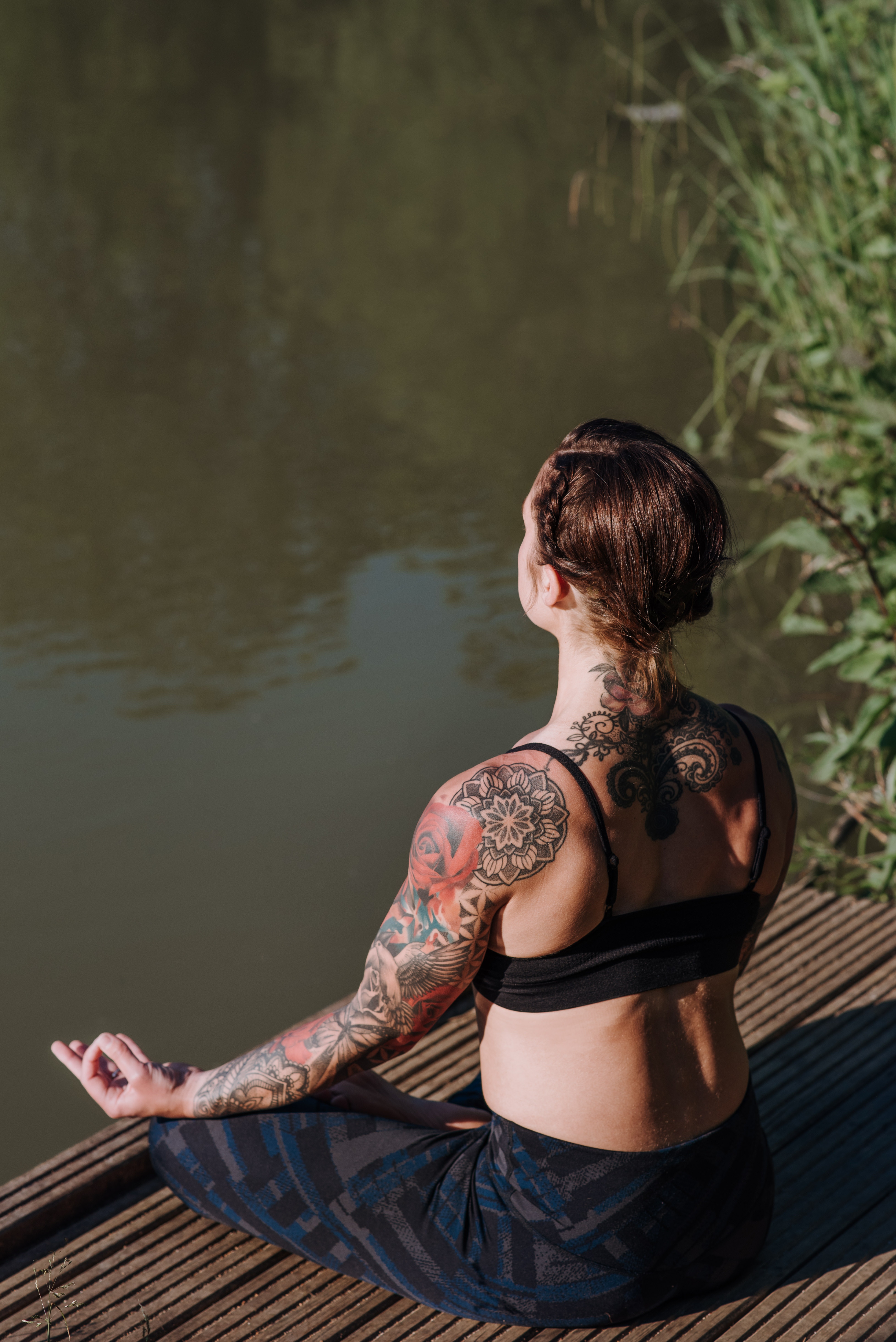
Meditation is one of the techniques often used for stress management. A person who is riddled with problems often finds it hard to focus, which often leads to more problems. Meditation techniques help a person achieve a calm state of mind without having to resort to drugs or relaxation tools and implements. Every step to meditation is done in the mind.
Remember that meditation is not a one shot deal. It is almost impossible to attain a calm state of mind in just a matter of minutes, especially if it’s our first time. It is essential that we keep on practicing meditation until we condition our mind to instantaneously achieve that calm state just by thinking about it. Here are some steps for a beginner to start with meditation as their Stress Management strategy.
1. Find A Quiet Corner To Start Our Meditation. Distraction is a hindrance to those who are still starting out with meditation. When we close our eyes, our sense of hearing will be twice as good, so almost any noise in our surroundings will make it hard for us to concentrate. For beginners, it is important to start out in a quiet place in our home where noise is non-existent. Close our windows and lock our door. If possible, we tell everyone in our home to minimize their noise so we won’t get distracted.
2. Ready Our Position. It is advisable for beginners to avoid lying down when practicing meditation. The aim here is not to sleep, and it is likely that we will fall asleep if our mind reaches a relaxed state. To stop this from happening, we can start our meditation in a lotus position or we can find a chair to sit on. Make sure that our back is straight and our hands are relaxed on the armrest or on our lap.
3. Begin Our Meditation With Proper Breathing. A good way to start meditation is to do the proper breathing exercise. We inhale through our nose and exhale slower through our mouth to begin. This way, we come into a rhythm that we may easily focus on. Also, the amount of oxygen in our body will help to keep us relaxed. Keep practicing our breathing until we do it easily without having to think about it.
4. Focus On Our Mind. While we concentrate on our breathing, we will achieve a state wherein our mind will start throwing images at us. These are mostly random- events of the day, future plans, problems and worries, fears and so on. It will be hard to ignore these thoughts and we are not supposed to ignore them. The gist here is to acknowledge these thoughts when they enter our mind and then release them. This might sound hard but here is a simple example to understand the concept. We know that we have furniture at home- we can see it clearly with our eyes, even when we are not really concentrating on it. Focusing on the furniture will usually make us think of its colour, its material, how it looks in that part of our home, and more. We need to be able to look at these random thoughts in a detached state, seeing them clearly in our head but not focusing our attention on it. There will come a time that these random thoughts will stop and we will notice that we are already in a blank space in our mind. This is the state we want to achieve during meditation.
This state or place where we can think about our problems and focus clearly begins to manifest a space of grace between us and our usual reactions. With this, we successfully master the basics of meditation.
